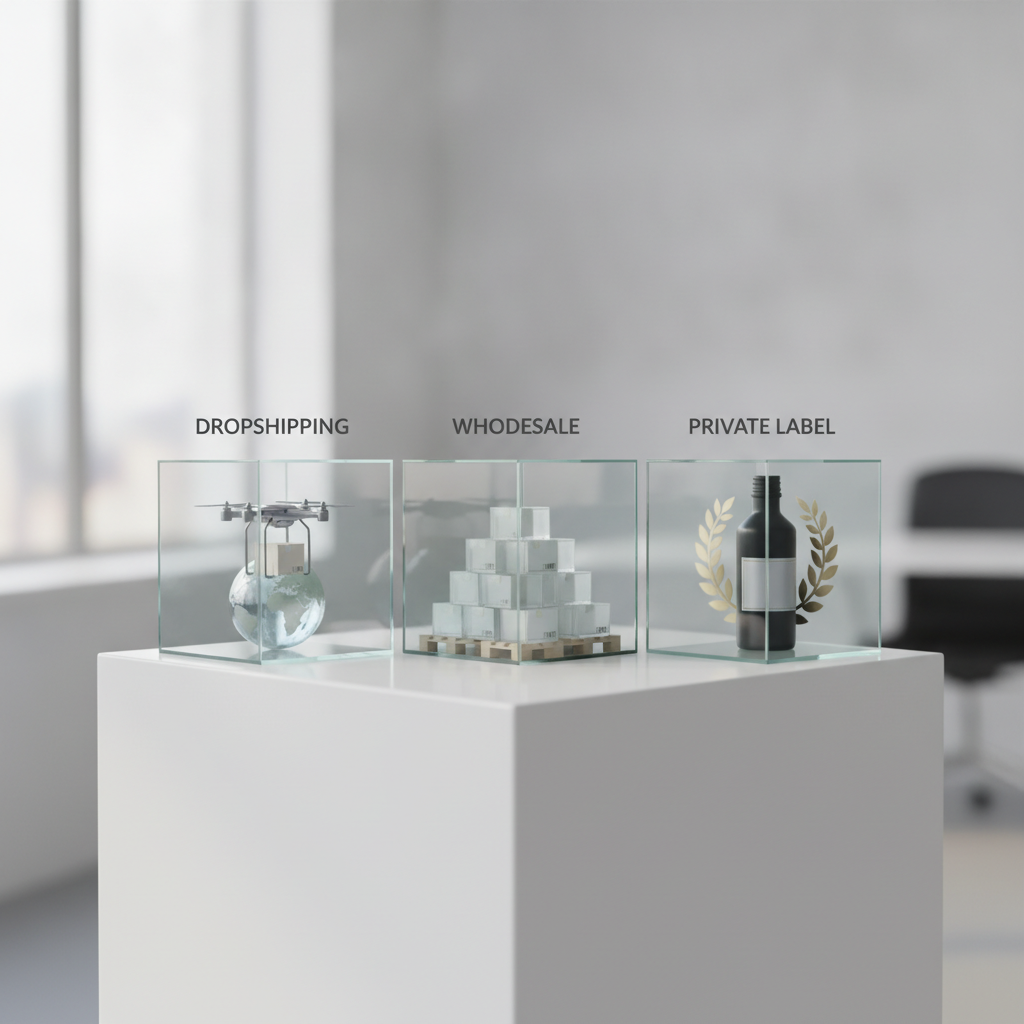
Choosing a business model is one of the first big decisions any online seller faces. Get it right and you build on a foundation that matches your budget and goals. Get it wrong and you may waste months chasing an approach that never fit. Three models dominate the ecommerce conversation: dropshipping, wholesale, and private label. Each has clear strengths and trade-offs, and the best choice depends on your capital, your appetite for risk, and how much control you want over your brand.
Below we break down how each model works, what it costs, and who it suits best, so you can move forward with a clear plan.
How Dropshipping Works
Dropshipping is a fulfillment method where you sell products without holding any inventory. When a customer places an order, you forward it to a supplier who ships the item directly to the buyer. You never touch the product, and you only pay for goods after you have already made a sale.
This low barrier to entry is why dropshipping remains so popular with new sellers. You can launch a store with minimal upfront cost, test a wide range of products, and pivot quickly if something does not sell. If you want to explore ready-to-sell options and suppliers, our dropship marketplace is a good place to start.
The trade-offs are real, though. Margins tend to be thinner because you are buying at retail-adjacent prices rather than in bulk. You also depend heavily on suppliers for shipping speed, product quality, and stock levels, which means customer experience is partly out of your hands. Competition can be fierce too, since anyone can list the same products.
Best for: Beginners, side hustlers, and anyone who wants to validate product ideas before committing capital.
How Wholesale Works
Wholesale means buying products in bulk directly from a manufacturer or distributor at a discounted per-unit price, then reselling them at a markup. Unlike dropshipping, you hold the inventory yourself and handle (or arrange) fulfillment.
Because you buy in volume, your per-unit cost drops significantly, which usually means healthier profit margins than dropshipping. You also control your own stock, so you can guarantee availability, ship faster, and manage quality before products reach the customer.
The catch is capital. Wholesale requires meaningful upfront investment to purchase inventory, plus space to store it and a system to manage fulfillment. There is real risk of being stuck with unsold stock if demand does not match your forecast. This model rewards sellers who already understand their market and know which products will move.
Best for: Sellers with some capital, proven demand, and the ability to manage or outsource storage and shipping.
How Private Label Works
Private label takes things a step further. You source a generic or customizable product from a manufacturer and sell it under your own brand, often with custom packaging, logos, or product tweaks. Think of a supplement, kitchen gadget, or skincare item that is manufactured by a third party but marketed as your own.
This model offers the highest potential for building long-term brand equity. Because the product carries your name, you are not competing directly on price with dozens of sellers offering an identical listing. Over time, repeat customers and brand loyalty can create a defensible business that is worth far more than a generic reseller operation.
Private label also demands the most from you. You typically need to commit to minimum order quantities, invest in branding and design, and often navigate longer lead times with overseas manufacturers. Quality control, sampling, and building supplier relationships take time and money. It is the slowest to launch but potentially the most rewarding.
Best for: Committed sellers who want to build a real brand and have the capital and patience to invest in it.
Comparing the Three Models Side by Side
Here is a quick way to think about the key differences:
- Upfront cost: Dropshipping is lowest, wholesale is moderate to high, private label is high.
- Profit margins: Dropshipping is thin, wholesale is moderate, private label is often the strongest.
- Control over quality: Dropshipping is limited, wholesale is high, private label is highest.
- Brand building: Dropshipping is weak, wholesale is limited, private label is strong.
- Speed to launch: Dropshipping is fast, wholesale is medium, private label is slow.
- Risk of dead stock: Dropshipping is none, wholesale is real, private label is real.
Many successful sellers actually combine models. A common path is to start with dropshipping to test which products resonate with customers, then move winning products to wholesale or private label once demand is proven. This staged approach lowers risk while still building toward a stronger, more profitable business.
How to Choose the Right Model for You
Start by answering three honest questions. First, how much capital can you afford to invest and potentially lose? Second, how much time can you commit before you need results? Third, do you want a quick income stream or a long-term brand asset?
If you have little money and want to learn fast, dropshipping is the natural entry point. If you have capital and confidence in specific products, wholesale gives you better margins and control. If your goal is to build something lasting and differentiated, private label is worth the extra effort.
Whatever you choose, focus on reliable suppliers, accurate product research, and strong customer service. Those fundamentals matter regardless of model. For more strategies on sourcing and selling, browse our blog.
Frequently Asked Questions
Which model is most profitable? Private label often delivers the highest margins and long-term value because you own the brand and avoid direct price competition. However, dropshipping can be profitable at scale with low risk, and wholesale offers solid margins with less upfront branding work.
Can I switch models later? Yes. Many sellers begin with dropshipping to validate products, then transition proven winners to wholesale or private label. Switching is a smart, gradual way to reduce risk.
Do I need a lot of money to start? Not for dropshipping, which requires minimal upfront investment. Wholesale and private label both require capital for inventory and, in the case of private label, branding and minimum order quantities.
Is dropshipping still worth it? Yes, especially for beginners. It remains one of the lowest-risk ways to enter ecommerce, learn the mechanics of selling online, and discover which products your audience wants.
Conclusion
There is no single best model, only the best model for your current situation. Dropshipping wins on speed and low risk, wholesale wins on margins and control, and private label wins on brand building and long-term value. Match the model to your budget, timeline, and goals, and do not be afraid to evolve as your business grows. The most successful sellers treat these approaches not as rivals but as tools, using each one at the right stage of the journey.